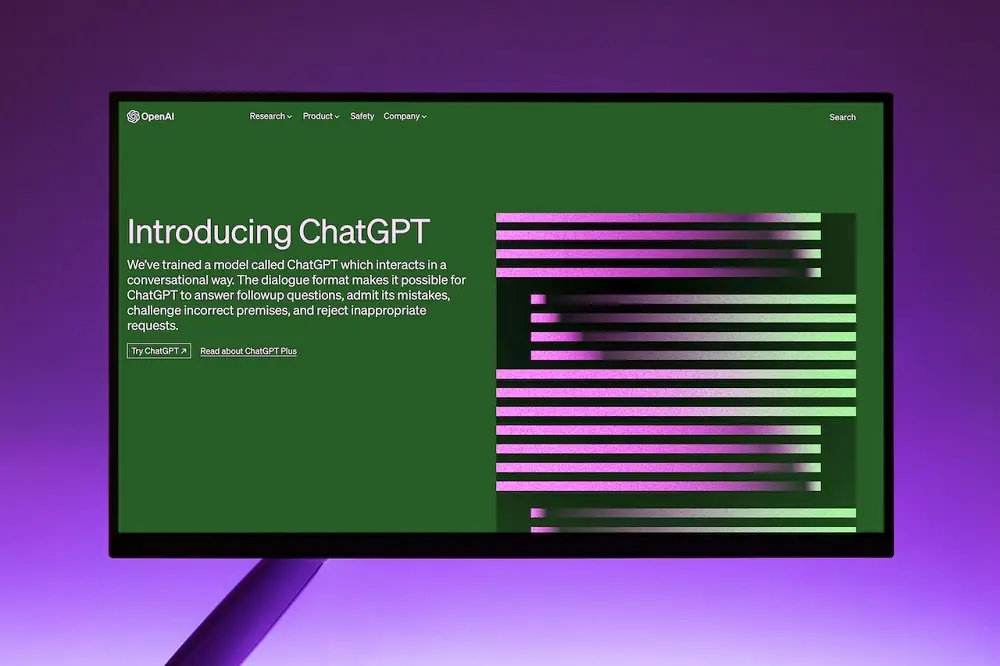
In December 2022, a groundbreaking event sent shockwaves through education and technology. The release of ChatGPT marked a turning point in how we access, engage with, and document information.
While the emergence of ChatGPT may have caught many by surprise, it is a culmination of advancements in chatbots and Large Language Models (LLMs). These sophisticated computer programs have the power to simulate and process human conversations, both written and oral, reshaping the landscape of teaching and learning.
At the heart of ChatGPT lies the acronym “GPT,” which stands for Generative Pre-trained Transformer. Unlike its predecessors, this transformative chatbot is not confined to predicting single words; it can generate entire paragraphs.
However, it’s important to note that these AI programs, while impressive, are not infallible as they may lack fact-checking mechanisms. This article delves into the implications of ChatGPT as a specific AI program and the broader impact of AI in education.
Monstera Production/ Pexels | Foster digital literacy skills among students
The advent of ChatGPT has sparked debates within academia. Some educators view these tools as potential threats to comprehensive learning, fearing that they could serve as shortcuts that hinder students’ development of critical thinking and originality.
Conversely, others see these AI applications as valuable aids for brainstorming, overcoming writer’s block, and generating initial drafts—a means to prepare students for a world where AI is integral to daily life. Academics must acknowledge the rapid changes AI is bringing to the educational landscape.
ChatGPT is a logical progression from word processors, spell checkers, grammar checkers, autocompletion tools, and predictive text programs. While predictive text programs are a subset of AI, AI programs like ChatGPT possess broader capabilities. Nevertheless, the pivotal factor remains the quality of input, often summarized by the phrase “GIGO”—garbage in, garbage out.
The potential of ChatGPT spans both positive and negative realms. In a surprising turn of events, a paper authored by ChatGPT passed peer review, initially leading reviewers to believe a human wrote it. However, when its AI origins were revealed, errors became apparent.
Similarly, ChatGPT managed to deceive scientists almost one-third of the time. Nonetheless, AI detection tools like the GPT-2 Output Detector and Turnitin now have integrated AI detection capabilities, safeguarding against such deception.
Andrew Neel/ Pexels | Encourage technology use as a tool, not a substitute, for human abilities
AI is gaining traction in various fields, including medicine, where its applications come with a framework of safeguards. In a study involving ChatGPT, benefits were noted in 85% of cases, offering alternative perspectives on diagnoses.
The discourse surrounding AI-generated writing in academia is still in its infancy, but educators must not only coexist with this innovation but also consider its integration into teaching methods. Preparing students to use these tools responsibly, addressing ethical concerns related to plagiarism, and enhancing digital literacy are essential steps for the future.
In 2023, The Chronicle of Higher Education reported on a virtual forum attended by 1,600 participants discussing the impact of ChatGPT on education. Recommendations emerging from the forum include:
Engage in open conversations with students about ChatGPT’s role in their learning journey.
Exercise caution while using detection tools to maintain academic integrity.
Utilize a variety of tools to enhance academic integrity.
Incorporate ChatGPT as an educational tool.
Foster digital literacy skills among students.
Start conversations within your campus or discipline about integrating AI.
cottonbro studio/ Pexels | To harness ChatGPT’s potential effectively, users should employ keywords and verbs to convey their intentions
Promoting critical reading and editing skills is a noble endeavor. ChatGPT can play a pivotal role in this mission by: