Vision care is moving into a new era where innovation and accessibility intersect, turning the eye into a vital lens for understanding whole-body health. From artificial intelligence to mobile diagnostic tools, emerging technologies are transforming eye exams, disease detection, and how patients connect with their providers.
The 2025 VSP Vision Innovation Challenge captured this evolution, spotlighting trailblazing startups redefining what it means to see—and to be seen—in a digital-first healthcare landscape.
Technology Leading the Way in Eye Health
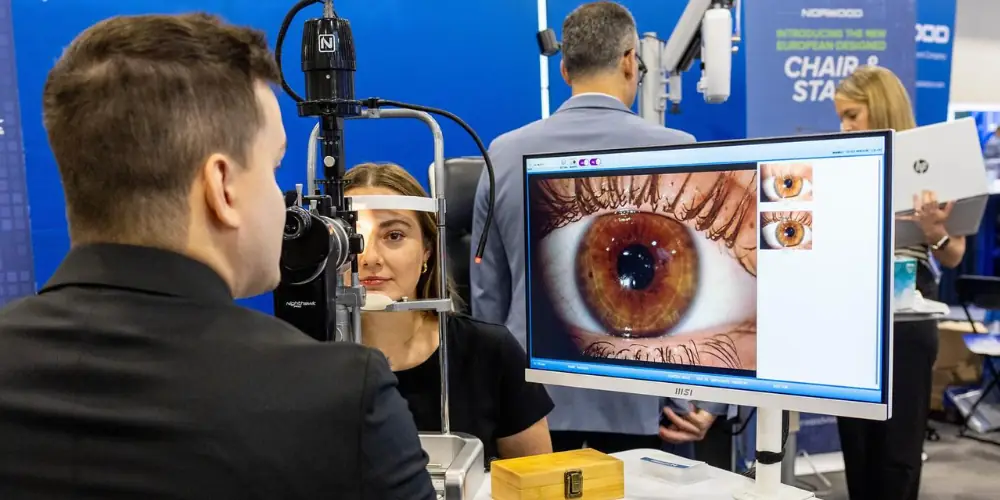
As healthcare embraces digital intelligence, vision care is stepping forward as one of its most dynamic fields. AI-driven tools, virtual reality platforms, and next-generation imaging are giving practitioners sharper insights and patients more individualized care. These advances are not only improving accuracy but also broadening access to essential eye health services.
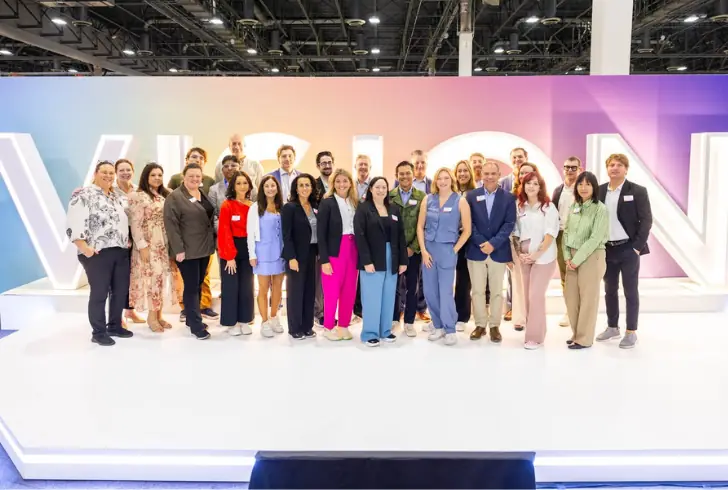
Instagram | vision.expo | The 2025 VSP Vision Challenge showcased six startups’ data-informed solutions for improving eye health for patients.
At the 2025 VSP Vision Innovation Challenge—co-hosted by VSP Vision™ and MATTER at Vision Expo West in Las Vegas—six startups presented forward-thinking solutions. Three early-stage and three late-stage companies competed, each showcasing how technology-driven care can improve both patient and provider experiences. Their work represents the next step in eye health: smart, data-informed, and deeply connected to overall wellness.
The Rise of Oculomics
A major focus at this year’s event was oculomics, the study of how the eyes can reveal insights about a person’s overall health. By analyzing tiny details in the retina, specialists can detect signs of systemic diseases like diabetes, heart disease, or neurological conditions.
Early-stage winner Vitazi.ai is pushing this field forward. Its AI-powered decision-support platform uses retinal scans and eye-tracking data to detect diabetic retinopathy, cardiovascular disease, and neurodegenerative disorders—often before symptoms appear.
“The retina shows us a lot of information, and we just felt we were doing an injustice by not extracting all of it,” said Jeffrey Wigdahl, Chief Technology Officer at Vitazi.ai.
In a Virginia pilot study, 10% of patients were found to have undiagnosed conditions. Vitazi.ai’s system helps optometrists guide patients toward specialists in ophthalmology, neurology, or cardiology. A standard eye exam now has the potential to uncover critical health clues.
Meeting Patients Where They Are
Access to care remains one of the biggest challenges in health services. Remidio, a late-stage finalist, is breaking barriers by making diagnostics mobile. The company developed a smartphone-based retinal imaging device that captures clear images without dilation. It runs multiple AI algorithms using its Vision Foundational AI Model.
“For so long, eye care has been tied to brick-and-mortar locations and expensive equipment,” said Erik Hafkey, Chief Commercial Officer at Remidio. “We’ve been able to bring doctor-delivered care to where the patient is.”
This technology is particularly valuable for remote or underserved regions. It expands access beyond traditional clinics, making early detection possible anywhere.
Prevention Through Early Detection
Late-stage winner Reyedar is taking prevention to the next level. The startup created lightweight frames with built-in eye-tracking sensors, linked to a cloud-based system and a custom PC. These tools detect early signs of glaucoma, Alzheimer’s, and Parkinson’s disease in both clinical and optical environments.
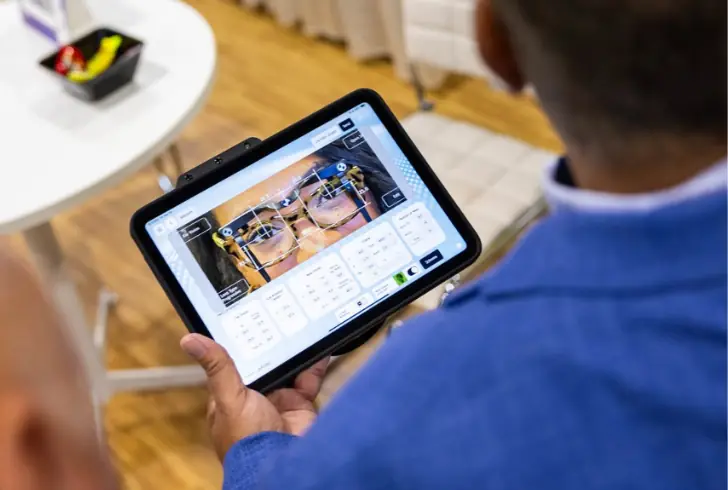
Instgaram | vision.expo | Reyedar created smart glasses with built-in eye-tracking to detect early signs of glaucoma.
“Our mission is to shift the paradigm from treatment to prevention,” said Alessandro Grillini, CEO of Reyedar. “But prevention only works if it’s truly accessible.”
Reyedar’s technology focuses on affordability and usability. Turning prevention into a simple screening process helps more people benefit from early diagnosis.
Connecting Technology, Health, and Humanity
The 2025 VSP Vision Innovation Challenge highlighted one clear message—the eye is becoming a gateway to total health. Startups like Vitazi.ai, Remidio, and Reyedar demonstrate how technology can make eye care smarter, faster, and more connected to overall wellness.
With advances in AI diagnostics, mobile health tools, and oculomics, vision care now supports early detection and prevention like never before. These developments are shaping a model where healthcare is not just reactive, but proactive and accessible to everyone.
A New Vision for the Future
The finalists of the 2025 Challenge revealed the direction the future of vision care is heading—integrated, intelligent, and inclusive. As oculomics expands, the ability to read health information through the eyes grows stronger.
The VSP Global Innovation Center’s “Future of Oculomics” Futurist Report explores how technology and science are coming together to improve the way people see and live.
Vision care has evolved beyond eyesight—it’s now about insight. Each new breakthrough brings healthcare closer to a world where prevention starts with the eyes.