Our smartphones keep us updated on everything right, from the weather forecast to staying connected with family, friends, and followers on social media, or consult a variety of apps to help us with our business or keep us entertained. Smartphones have become such an integral part of our lives that we can’t seem to do without them. So what does the future hold for smartphones? Will it become obsolete? Or will there be a radical change in the way it works?
We already have several voice assistants on board, such as Bixby, Alexa , Siri, Cortana, and Google Assistant. However, much like the film Her, there is a widespread expectation that voice-activated virtual assistants powered by AI will become a common thing. They will get to know all about us, in fact so well that they would know us better than ourselves.
Further, they would speak right into our inner ears and to our minds. And we may not have to speak to train them. We can power them through our thoughts. This can bring sweeping changes in our lives.
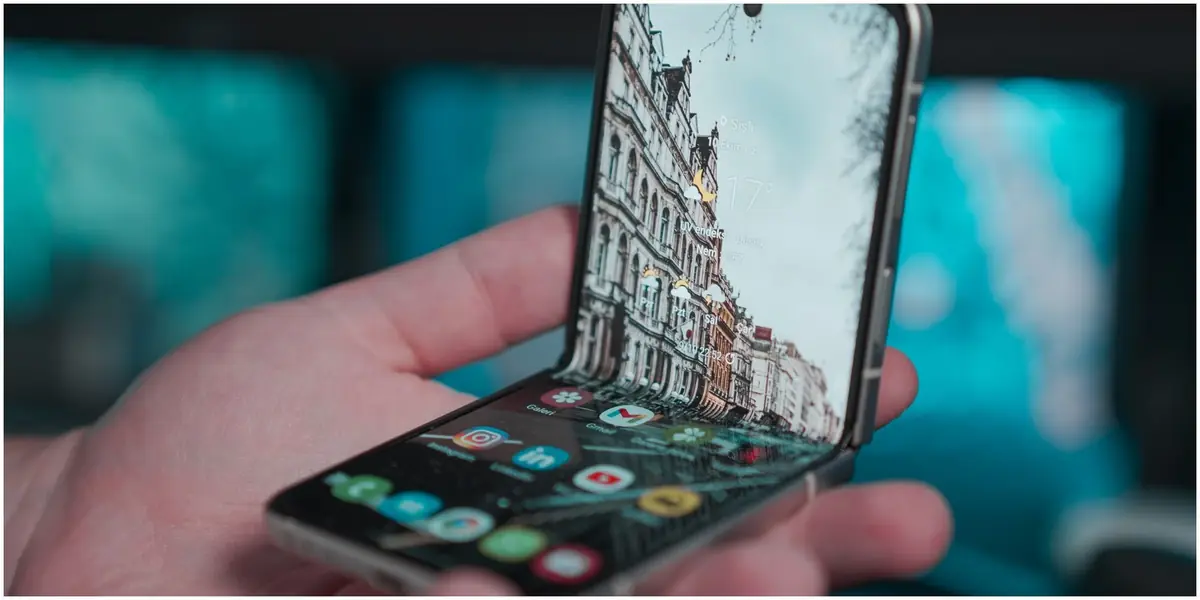
Flexible, stretchable display screens will be the future norm of cell phone technology. While consumers like to keep their cell phone screens large, keeping them bulky may prove inconvenient. Let’s get it straight we need our phones to fit into our pockets. And in this case, foldable phones may be exactly what we need.
We may get a greater range of larger yet conveniently-thinner stretchable and foldable screens. It is similar to an elastic band that stretches to increase its length. It is certainly the future of cell phone technology, and we can expect it to stretch from 6 inches to 7.2 without leading to screen distortion.
Can our phones be part of us in the literal sense of the word? Much like The film Total Recall, there was a train of thought that exercised something similar. The film showed us a way how phones can be implanted right into the palm of your hand. BBC’s recent near-future drama, called Years and Years, had a similar thing. It revolves around a teenager Bethany who had phone implants to use her hand as an earpiece and mic. Science fiction can soon turn into a veritable truth. In fact, at the 2016 World Economic Forum in Davos, there were suggestions that implantable technologies could be available to us by 2023.
Mobile phone companies have long been hinting at the use of the wearable future of smartphones. This includes something that you can wrap around your wrist. It can also be a GPS-enabled belt clip, or you can also wear it like pair of glasses (there have been reports about the release of the Apple Glass, which may be better than the Google Glass, which couldn’t quite live up to the hype).
Devices can reshape and change as per the individual needs. While the concept of flexible phones has been hinted at and demonstrated at trade shows and exhibitions, manufacturers have not been able to bring wearable phones to market. So will wearable smartphones be a thing of the future? We have to watch this space for more.
With the increasing number of mobile apps usage and banking, retail general commercial functions such as mobile payment technologies certainly seem to be the future for cell phone technology. It can effectively change smartphones into credit cards and contactless payment devices. The future of cell phone technology may act as a means of authenticating identities with a combination of unique identifiers, such as biometrics, GPS technology, and more.
The future of smartphones may increasingly contribute more and more to bringing a complete transformation of traditional and online banking procedures. It may have the capacity of everything right from capturing screenshots of checks via several mobile banking apps. It may be highly probable to enable near real-time card-to-card money transfers. Smartphones may continue to automate traditional banking tasks and will bring about a paradigm shift towards online banking.
There you go, the smartphone will continue to rule our lives in the future too. We will, of course, have to find out eventually to what extent will it impact our lives and will it continue to make lives easier or make us more smartphone-dependent, more than ever? We still don’t know whether that is a good thing.