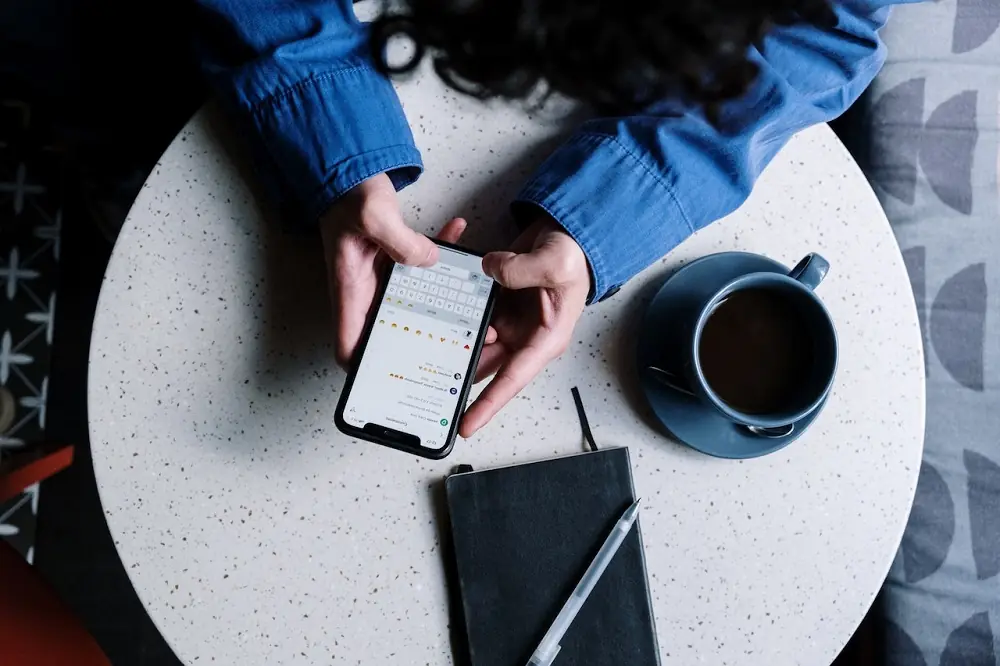
In digital communication, Americans seem to be holding on tight to their beloved SMS texting. While text messaging apps like WhatsApp have gained immense popularity worldwide, they haven’t quite taken the U.S. by storm.
So, what’s the deal with this apparent divide in communication preferences? Let’s dive into the intriguing world of messaging apps and explore why WhatsApp, despite being a global sensation, has yet to conquer the hearts of American users.
WhatsApp, born in 2009, is the kingpin of messaging apps across the globe. It has captured users’ hearts in diverse corners of the world, from Spain to South Africa, Brazil to India. With adoption rates soaring to over 50% in some countries and surpassing 90% in others, WhatsApp has become a household name.
Tracy Le Blanc/ Pexels | Facebook’s acquisition of WhatsApp for $19 billion highlighted the app’s immense potential
In contrast, only 12% of mobile users in the United States have embraced it, according to Statista. Nonetheless, a staggering 2 billion people from 180 countries have hopped onto the WhatsApp wagon. This immense user base made it an irresistible acquisition for Facebook in 2014, which shelled out an eye-popping $19 billion for the app.
WhatsApp isn’t the only player in the messaging arena; competitors are crowded worldwide. WeChat boasts over 1 billion users in China, Viber is significant in Eastern Europe, and Facebook Messenger reigns supreme in North America. Experts are even predicting that messaging apps could soon surpass social media giants like Facebook and Twitter as the preferred mode of communication.
So, what’s behind this global infatuation with messaging apps? To unravel this mystery, we need to consider several factors.
Anton/ Pexels | WhatsApp’s global reach is a testament to the power of messaging apps in connecting people across borders and cultures
In many countries, including the U.S., carriers often include text messaging in monthly plans. However, cell phone carriers levy per-text fees in regions like Europe that can quickly add up. This has spurred the adoption of messaging apps, which offer a more budget-friendly alternative, saving users a tidy sum on their mobile bills.
Messaging apps like WhatsApp operate independently of operating systems. This means that users with different smartphones can seamlessly exchange messages using mobile data or Wi-Fi. It reduces mobile service costs and allows international communication without incurring hefty charges.
Messaging apps offer a world of possibilities beyond simple SMS. With unlimited characters, users can send voice and video calls, attach various documents, and share audio and video clips. Even if your cell service is temporarily suspended due to unpaid bills, you can still connect through Wi-Fi.
Pixabay/ Pexels | WhatsApp’s commitment to end-to-end encryption is a double-edged sword, lauded for privacy but criticized for its potential misuse
WhatsApp, in particular, has earned accolades for its robust end-to-end encryption, ensuring message confidentiality. Unlike conventional SMS, which lacks encryption, WhatsApp prioritizes user privacy. However, this has also raised concerns among government agencies about its potential misuse by criminals and terrorists.
Despite WhatsApp’s global dominance, challenges persist. WhatsApp Business, a paid subscription, aims to expand its reach, but its affiliation with Facebook has led some privacy-conscious users to seek alternatives. Apps like Telegram and Threema have emerged as contenders, offering a refuge for those wary of Facebook’s involvement.