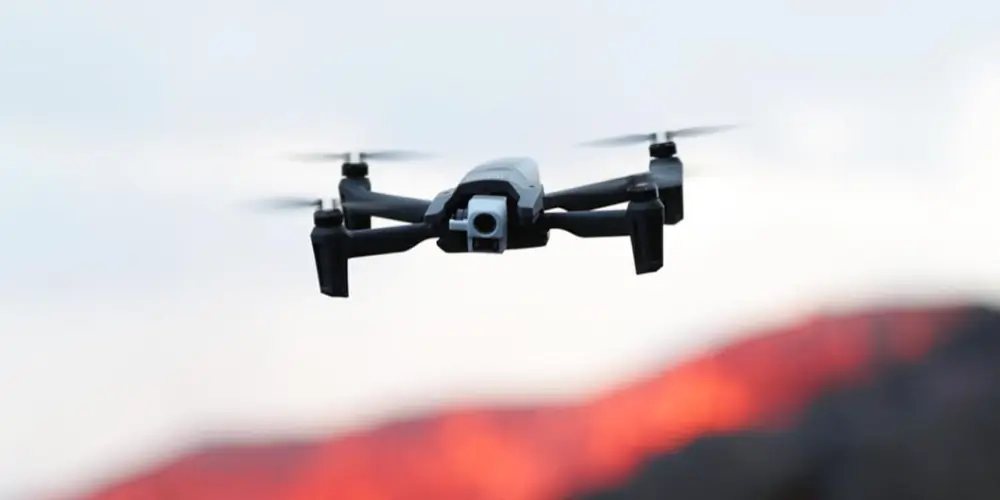
Thermal drone, equipped with infrared cameras, have revolutionized various fields by providing crucial information that traditional methods often miss. From search and rescue missions to industrial inspections, these advanced UAVs (Unmanned Aerial Vehicles) are indispensable.
In this article, we’ll explore the technology behind thermal drone, their applications, and what to consider when choosing one.
Instagram | dronenerds | Thermal drones help firefighters navigate through smoke to locate and contain hot spots effectively.
Thermal drones have proven invaluable in various real-world situations:
1. Wildfire Management
In March 2022, firefighters in Cleburn, Texas, used a DJI Matrice 30T to monitor and control a spreading grassland wildfire. The drone’s thermal imaging capabilities allowed firefighters to see through thick smoke, locate hotspots, and direct ground teams efficiently, containing the fire in just four hours.
2. Disaster Response
During Vietnam’s monsoon-related floods and landslides, drones like the DJI Matrice 300 RTK and DJI Mavic 2 Enterprise Dual played a crucial role. They provided aerial imagery, detected heat signatures of stranded individuals, and created 3D models to assist in rescue operations.
3. Industrial Inspections
Argentina’s oil refineries utilize thermal drones such as the DJI Matrice 300 to inspect plant architecture. These drones detect energy variances, allowing inspectors to assess equipment conditions without exposing personnel to hazardous areas.
4. Chemical Leak Monitoring
In Sarasota, Florida, thermal drones were deployed to manage a chemical leak, helping personnel pinpoint the source within an ammonia cloud and take appropriate action.
5. Wildlife Protection
Farmers use drones like the DJI Mavic 3T to scan fields for hidden baby deer, ensuring the animals’ safety before plowing.
These examples highlight the diverse applications of thermal drones, showcasing their importance in various critical situations.
Thermal imaging technology is based on detecting infrared radiation (IR) emitted by objects. The heat signature of an object depends on how fast its atoms are moving—the faster they move, the hotter the object. Thermal cameras convert these infrared signatures into visible images.
Instagram | 5mdrones | Thermal drones typically feature gimbals for image stabilization and full 360-degree rotation.
Thermal cameras use specialized lenses to detect infrared frequencies and sensors, known as microbolometers, to create visual displays of heat signatures. When mounted on a drone, these cameras often include gimbals for image stabilization and 360-degree rotation. Modern thermal sensors have advanced significantly, no longer requiring specialized cooling, making them more accessible and user-friendly.
After capturing thermal data, drones display it on screens for operators to review. Various color palettes can be used to highlight different heat levels:
These color palettes help operators extract detailed information from thermal images. Advanced thermal cameras, like the Zenmuse H20T, offer multiple viewing options and record data with GPS tags for detailed analysis.
Thermal cameras are precision instruments that require careful handling to avoid damage. Here are some tips for maintaining your thermal drone camera:
By following these guidelines, you can ensure the longevity and accuracy of your thermal camera.
Modern thermal imaging systems come with a range of advanced features:
These advancements make thermal drones more versatile and capable of handling complex missions.
Instagram | aerialmediapros | The Zenmuse H20T features a 20MP zoom camera, 12MP wide camera and a 640 x 512px thermal camera.
Selecting the right thermal imaging payload involves considering several factors:
For instance, the Zenmuse H20T is a high-performance payload with a 20MP zoom camera, 12MP wide camera, 1200m laser rangefinder, and a 640 x 512px thermal camera. It supports high-sensitivity thermal recording and customizable isothermal settings, making it suitable for various applications.
Choosing the right thermal drone chassis is as important as selecting the camera payload. Here are some leading commercial drones for thermal applications:
Thermal drones are transforming various industries with their ability to detect heat signatures and provide valuable data from above. From firefighting and search and rescue to industrial inspections and agriculture, these drones offer unparalleled efficiency and safety. With ongoing advancements, thermal drones are set to play an even more significant role in the future, making them indispensable tools in many sectors.