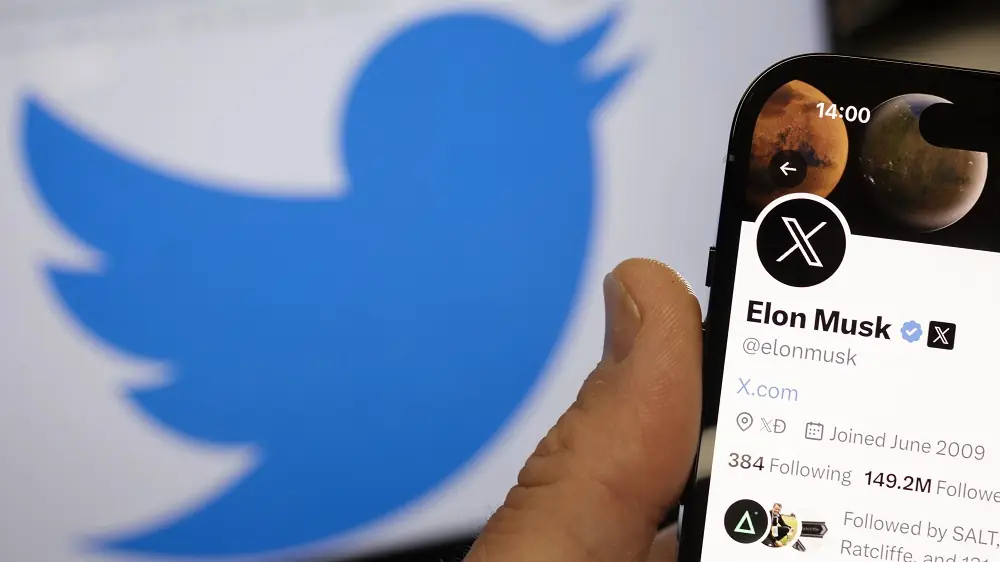
The digital realm was set abuzz with curiosity and excitement as the social media giant Twitter made a surprising move by changing its name to X.com. With X.com now redirecting to Twitter.com and the iconic bird logo replaced by a flashy “X” at the company’s headquarters, it’s evident that something significant is underway.
This name change is just a part of Twitter’s ongoing evolution, a shift from its origins as a platform for 140-character messages into what CEO Linda Yaccarino envisions as an app capable of “everything.”
In this article, we’ll explore the implications of this rebranding and the ambitious aspirations of billionaire owner Elon Musk, who is determined to reshape Twitter into a super-app known as “X.”
Stock Image/ Business Today | Rebranding Twitter could help the company in a number of ways
Elon Musk, the enigmatic entrepreneur, has been vocal about his goal of turning Twitter into a super-app akin to China’s WeChat. This aspiration is rooted in creating a one-stop destination for a diverse range of online activities, similar to what WeChat offers its users.
While there’s no exact American equivalent yet, industry experts imagine an app where users can seamlessly engage in various activities without leaving the platform. Nii Ahene, Chief Strategy Officer of marketing firm Tinuiti, explains that users can expect a variety of functionalities on this revamped platform.
From listening to podcasts and shopping to watching videos, Twitter’s transformation aims to provide a comprehensive online experience. The platform enables live audio conversations, extended text messages, and video broadcasting. Introducing paid subscriptions could also lead to revenue-sharing possibilities with users, potentially transforming Twitter into a mainstream version of platforms like Patreon.
However, making this vision a reality requires significant investment and time, especially considering Twitter’s current staff constraints. Despite the challenges, Musk is determined to reshape Twitter’s identity, repositioning it as a multifaceted platform capable of catering to diverse online needs.
Twitter/ Sky News | Elon Musk took over Twitter in October 2022 in a $44 billion deal
Elon Musk’s fascination with the letter X is undeniable. It dates back to his very first startup, X.com, which eventually transformed into PayPal through a merger. Even after acquiring Twitter, Musk’s fixation with the letter persisted. He expressed excitement about implementing X.com’s essence within Twitter’s framework.
The letter X is a recurring theme across Musk’s ventures, including SpaceX, xAI (an artificial intelligence app), and the Model X from Tesla’s early line-up of electric vehicles. Musk’s naming conventions extend to his personal life, as evidenced by his son’s unique name, X Æ A-XII. This fascination appears to transcend symbolic representation, becoming a fundamental part of Musk’s creative endeavors.
While the name change is significant, it primarily signifies a continuation of Elon Musk’s stewardship over Twitter. This rebranding reaffirms Musk’s commitment to reshaping the platform according to his vision rather than flipping it to a different owner, as some speculated. Bloomberg Intelligence analyst Mandeep Singh points out that the name change eliminates the possibility of a quick ownership transition.
Getty Images/ Forbes | Twitter wants to be more like WeChat, the Chinese super-app with more than 1.3 billion monthly active users.
Turning Twitter into an “everything app” is a formidable task, and there are potential roadblocks that Musk’s vision must navigate. One key challenge is creating a seamless user experience within the diverse functionalities. Users accustomed to the conventional Twitter experience might find the transition confusing, potentially affecting the platform’s usability.
Furthermore, attracting advertisers and generating revenue poses its own set of challenges. Elon Musk’s philosophy of letting a good product sell itself clashes with many large brands’ conventional advertising strategies.
While expanding into areas like shopping and paid subscription content could diversify revenue streams, it requires substantial investments in infrastructure and staff. The transition from a standalone app to a comprehensive platform necessitates significant cloud infrastructure investment, which Twitter may struggle to fulfill as it currently stands.